Digital Systems and Logic Circuits Laboratory
Faculty: Faculty of Computer and Information Sciences
Location: Laboratory Building, 3rd Floor, A3-02
Capacity: 36 students
Responsible Faculty Members: Prof. Dr. Oğuz FINDIK, Assoc. Prof. Dr. Emrullah SONUÇ
Laboratory Supervisor: Research Assistant Elif DORUKBAŞI
Laboratory Views
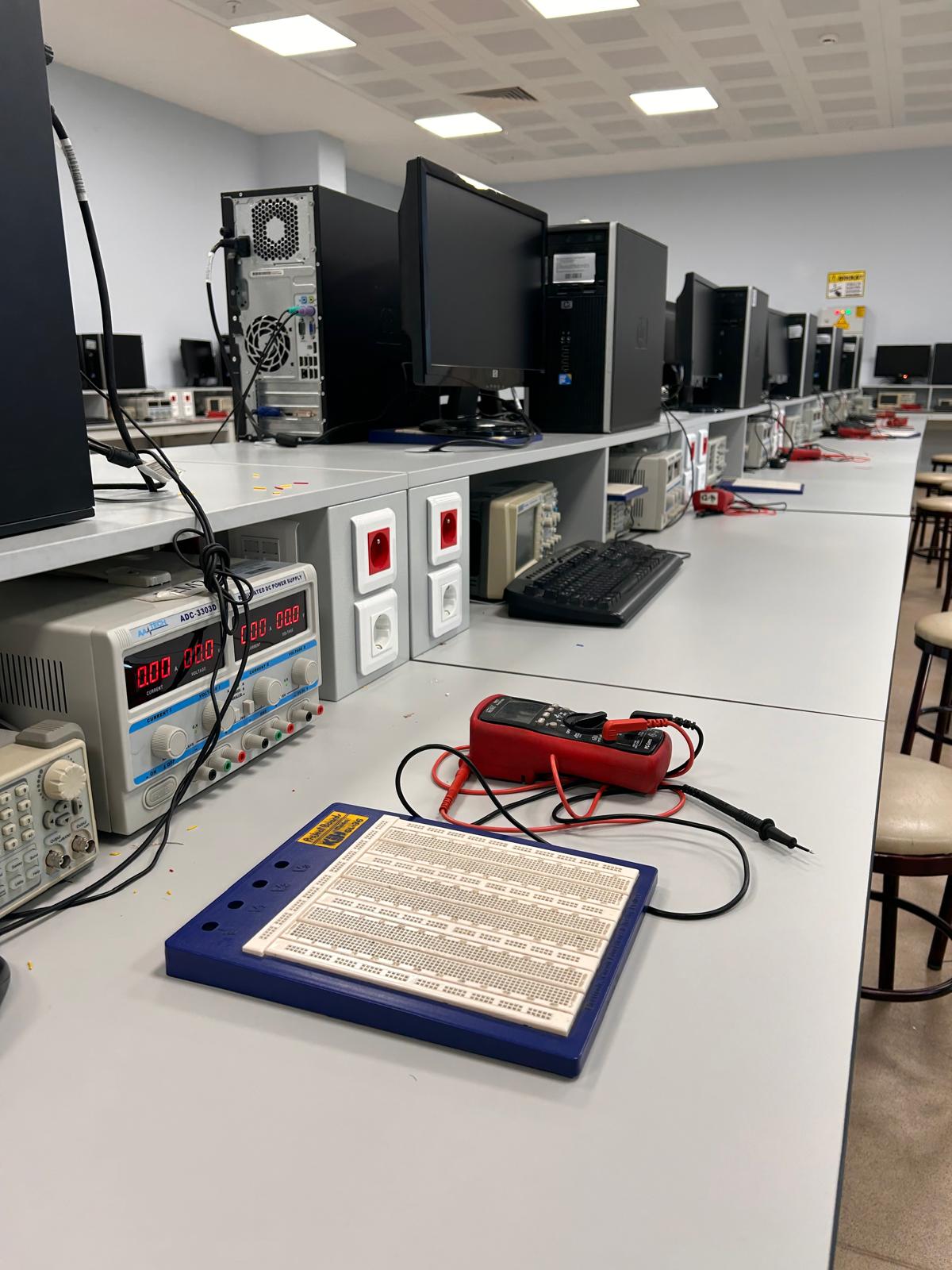 Karabük University Faculty of Computer and Information Sciences – Digital Systems Laboratory work area and student experiment setup.
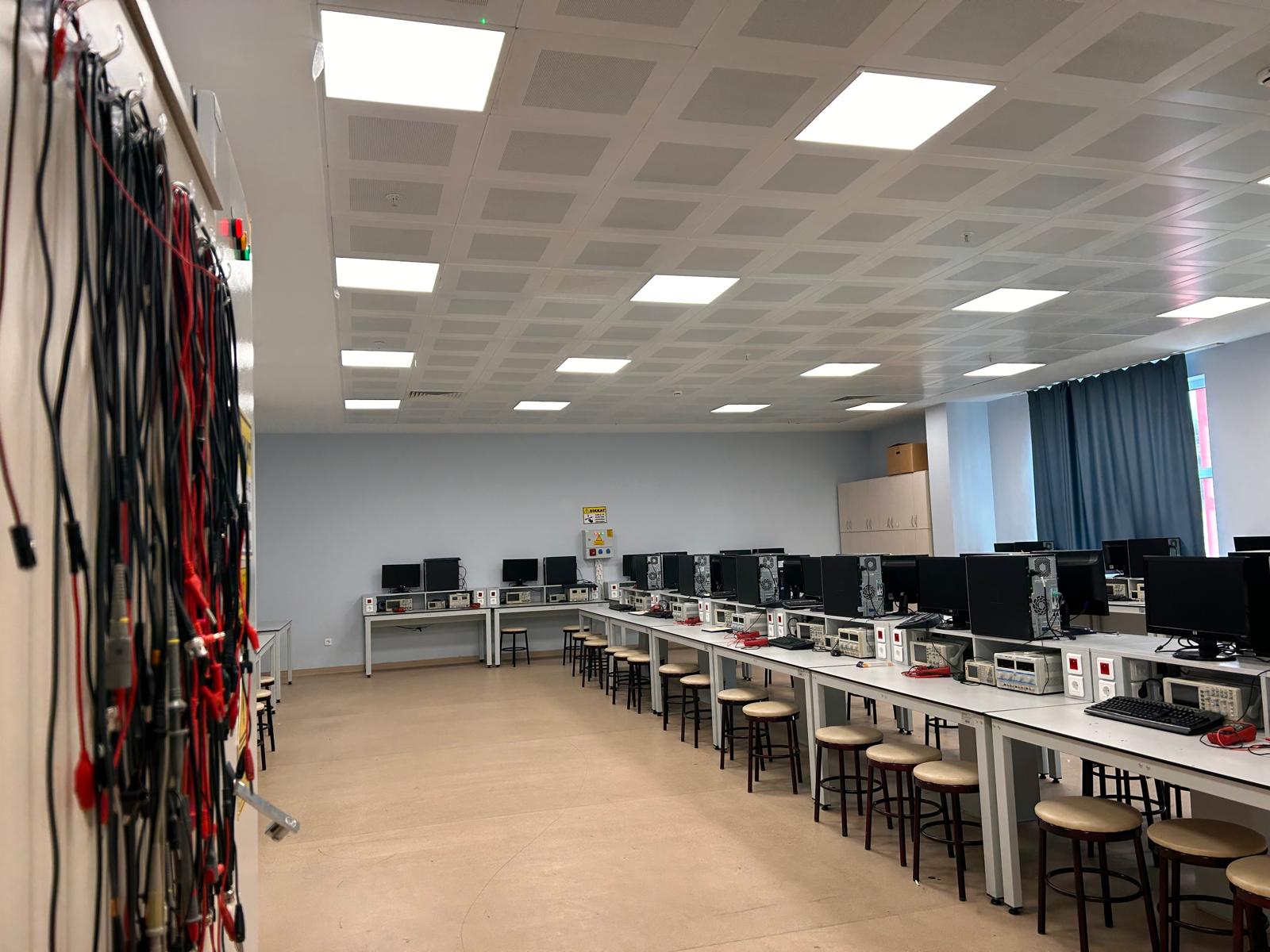 Faculty of Computer and Information Sciences – General view of Logic Circuits Laboratory.
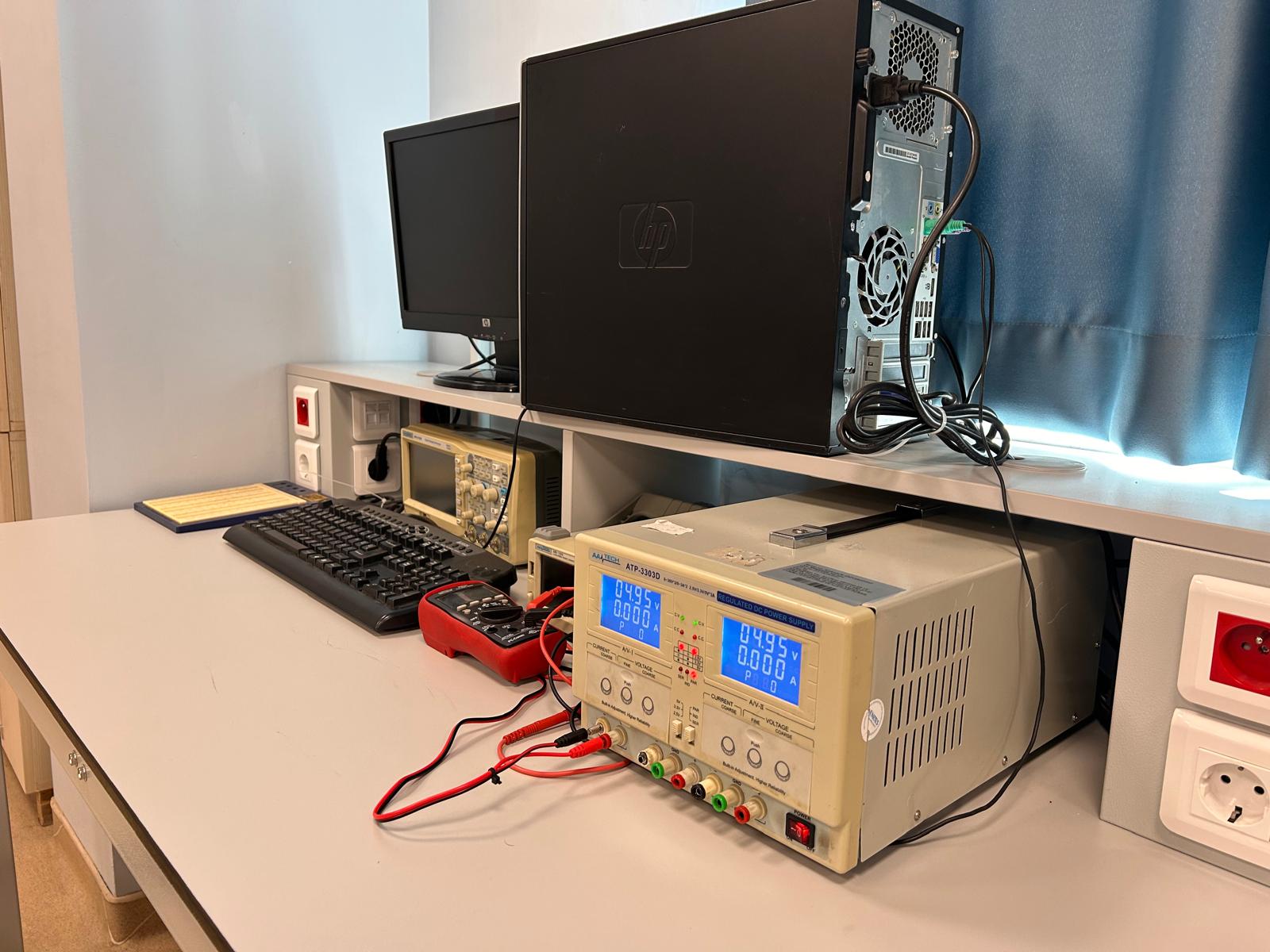 Karabük University Faculty of Computer and Information Sciences – Experimental equipment located in Digital Systems and Logic Circuits Laboratory.
Purpose of the Laboratory
The Digital Systems and Logic Circuits Laboratory aims to teach students the fundamentals of digital systems, the design of logic circuits and digital hardware applications experimentally. This laboratory provides a practical learning environment on digital electronics and microcontroller fundamentals.
Laboratory Usage Rules
-
Entry to the laboratory is only allowed during class hours or accompanied by authorized personnel.
-
Devices should only be used under authorized supervision.
-
Connections should not be energized before the experiment without being shown to the instructor.
-
Students must keep a laboratory notebook and record experiment results.
-
In case of damage to equipment, the responsible personnel must be notified immediately.
-
At the end of the laboratory, all circuits must be disconnected and the desk arrangement must be maintained.
Areas of Use
-
Digital Systems course applications
-
Logic Circuit Design projects
-
Microcontroller-based system development studies
-
Graduation projects and academic research
-
Test environment for IEEE student community projects
Learning Outcomes
-
Comprehends the fundamentals of digital systems (binary systems, logic gates, Boolean algebra).
-
Can design and analyze combinational and sequential circuits.
-
Can program FPGA-based circuits (VHDL/Verilog).
-
Gains the ability to experiment and debug on real hardware.
-
Develops teamwork and technical reporting skills.
-
Ensures compliance with safety and ethical rules in industrial circuit design.