Basic Electronics Laboratory
Faculty: Faculty of Computer and Information Sciences Laboratory Building
Location: 3rd Floor B3-07
Capacity: 40 Students
Responsible Faculty Members:
-
Assoc. Prof. Dr. Funda DEMİR
-
Asst. Prof. Dr. İsa AVCI
-
Asst. Prof. Dr. Ferhat ATASOY
-
Asst. Prof. Dr. Ömer DAKKAK
Laboratory Supervisors:
-
Research Assistant Kadriye ÖZ
Laboratory Views
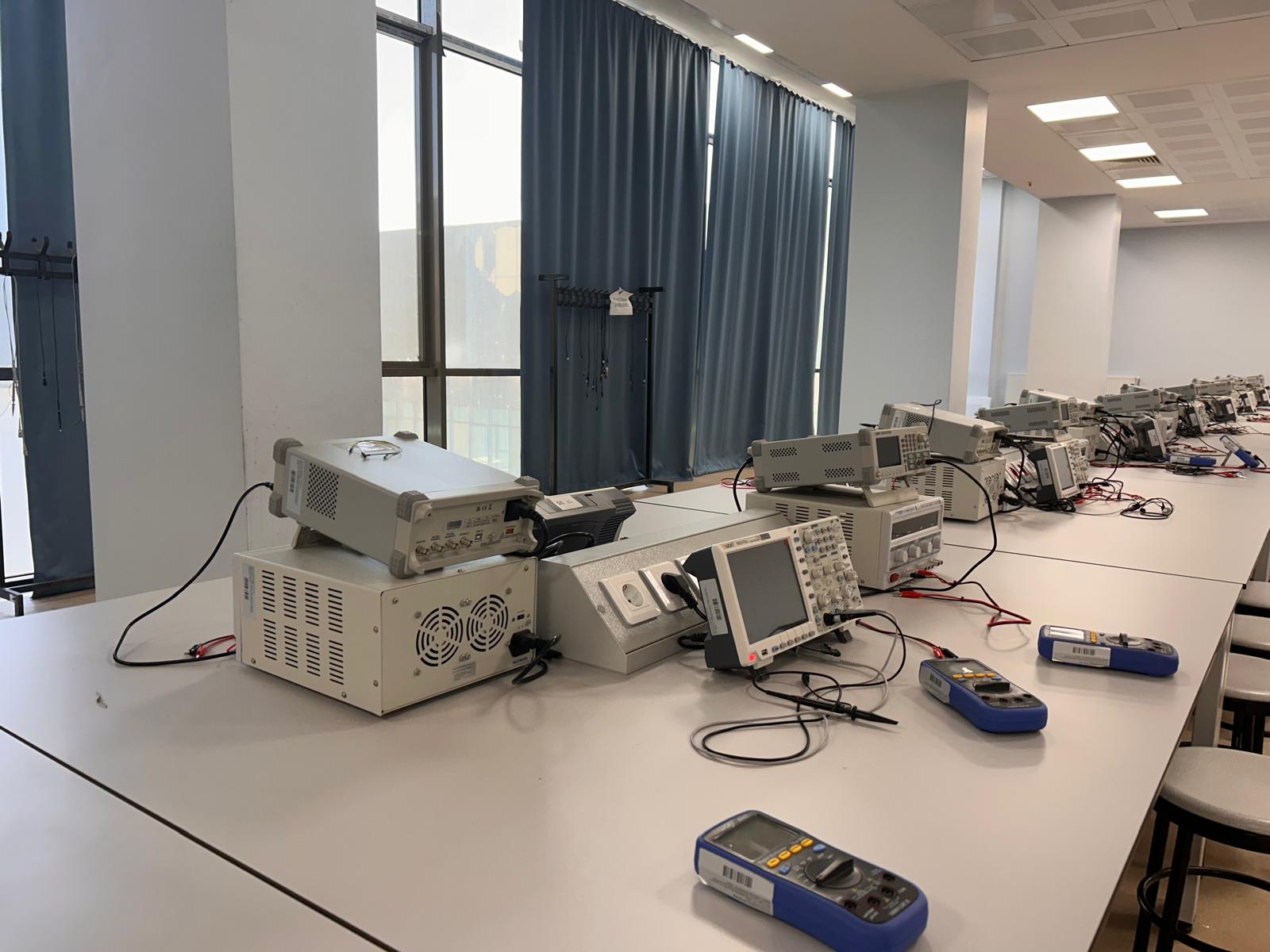
Faculty of Computer and Information Sciences -Circuit boards and measurement devices in the Basic Electronics Laboratory.
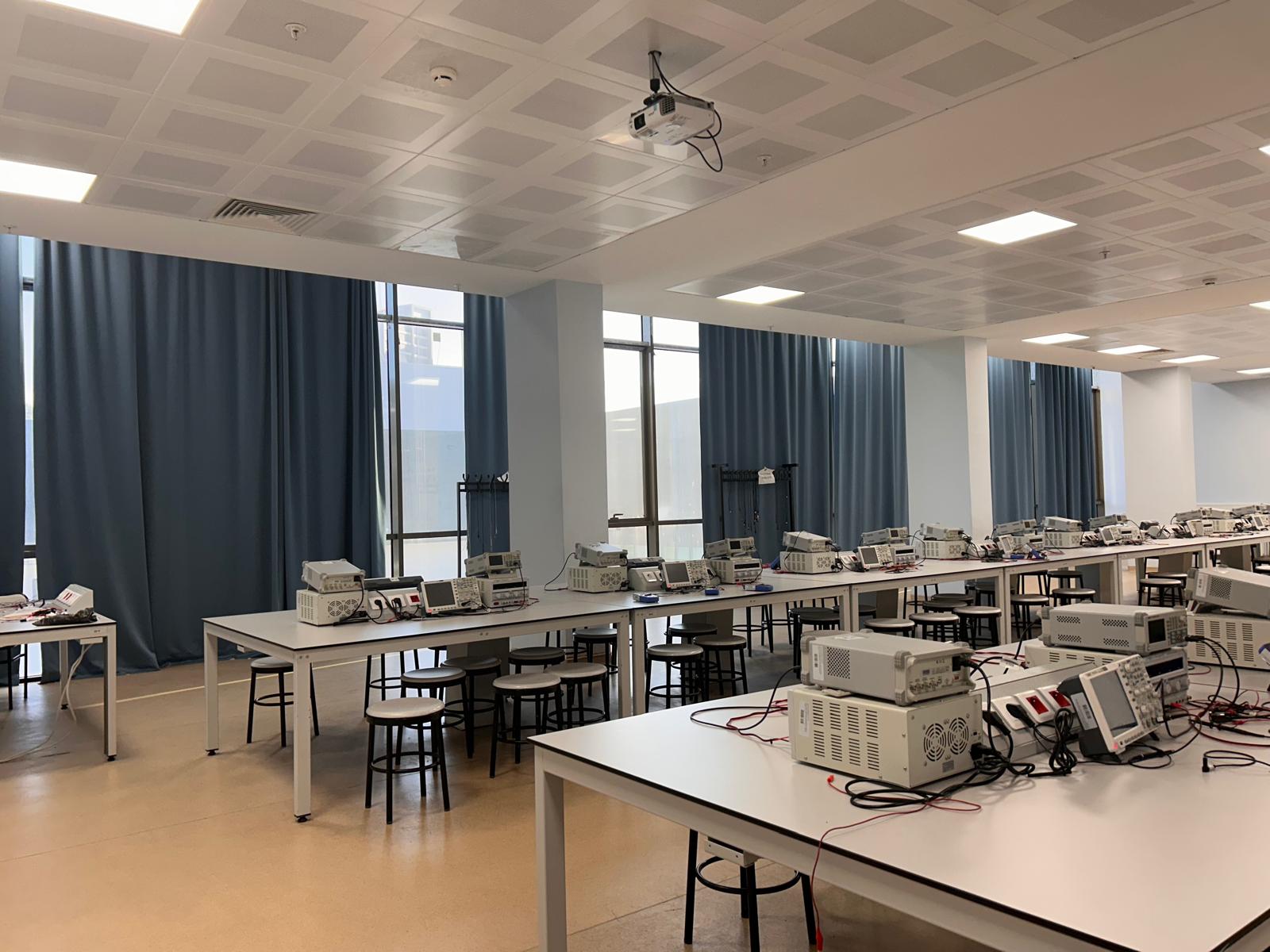 Faculty of Computer and Information Sciences – General view of Basic Electronics Laboratory.
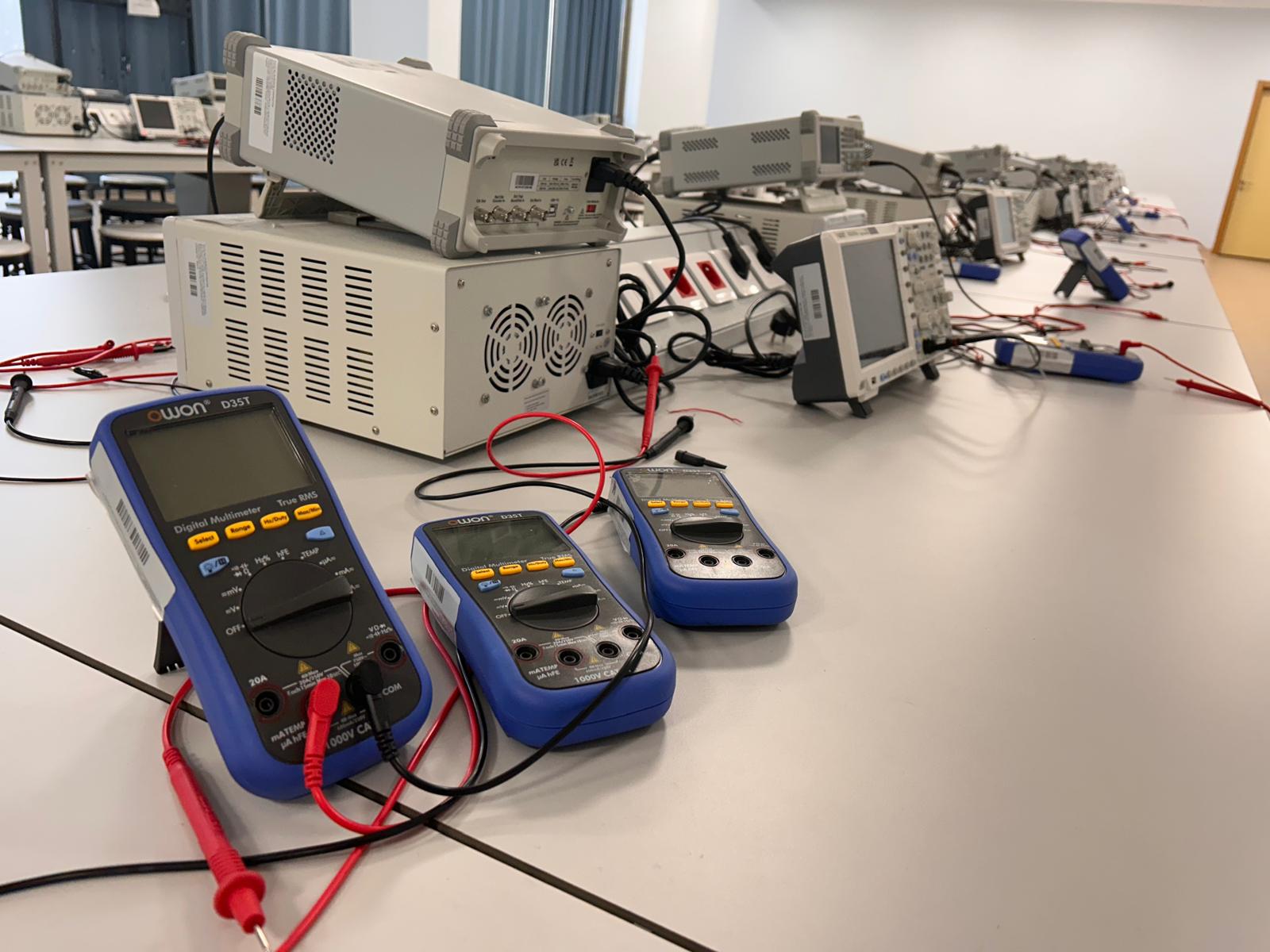 Faculty of Computer and Information Sciences – Basic Electronics Laboratory student workbenches.
Purpose of the Laboratory
The Basic Electronics Laboratory aims to teach students the behavior of electronic circuit components (resistor, capacitor, diode, transistor, etc.) experimentally and to provide practical analysis and design of basic electronic circuits. The laboratory develops practical engineering skills by enabling students to observe the electronic principles they have learned theoretically in a real measurement environment.
Laboratory Usage Rules
-
Entry to the laboratory is only allowed during class hours or accompanied by authorized personnel.
-
Devices should be used under the supervision of the assigned instructor or laboratory supervisor.
-
Connections should not be energized before the experiment without being checked.
-
Experiment results must be recorded in a laboratory notebook or electronic report format.
-
Failures in devices or measuring instruments must be reported to the responsible personnel immediately.
-
At the end of the laboratory, circuit connections must be disconnected and the desk arrangement must be maintained.
Areas of Use
-
Basic Electronics course applications
-
Analog circuit analysis and design
-
Transistor, op-amp and filter circuit experiments
-
Graduation projects and research-based electronic circuit designs
-
Project tests conducted by student communities
Learning Outcomes
-
Comprehends the working principles of electronic circuit components experimentally.
-
Applies Ohm's Law, Kirchhoff's laws and basic circuit analysis methods.
-
Can measure and interpret the characteristics of diode, transistor and op-amp circuits.
-
Can set up electronic circuits on breadboard and debug them.
-
Can report and analyze measurement results correctly.
-
Develops teamwork, safety awareness and technical communication skills.