Faculty of Computer and Information Sciences Free Study Laboratory
Faculty: Faculty of Computer and Information Sciences – Laboratory Building
Location: 3rd Floor D3-03
Capacity: 20 Students
Technical Supervisor: Technician Emre Can DEMİRCİ
Laboratory View
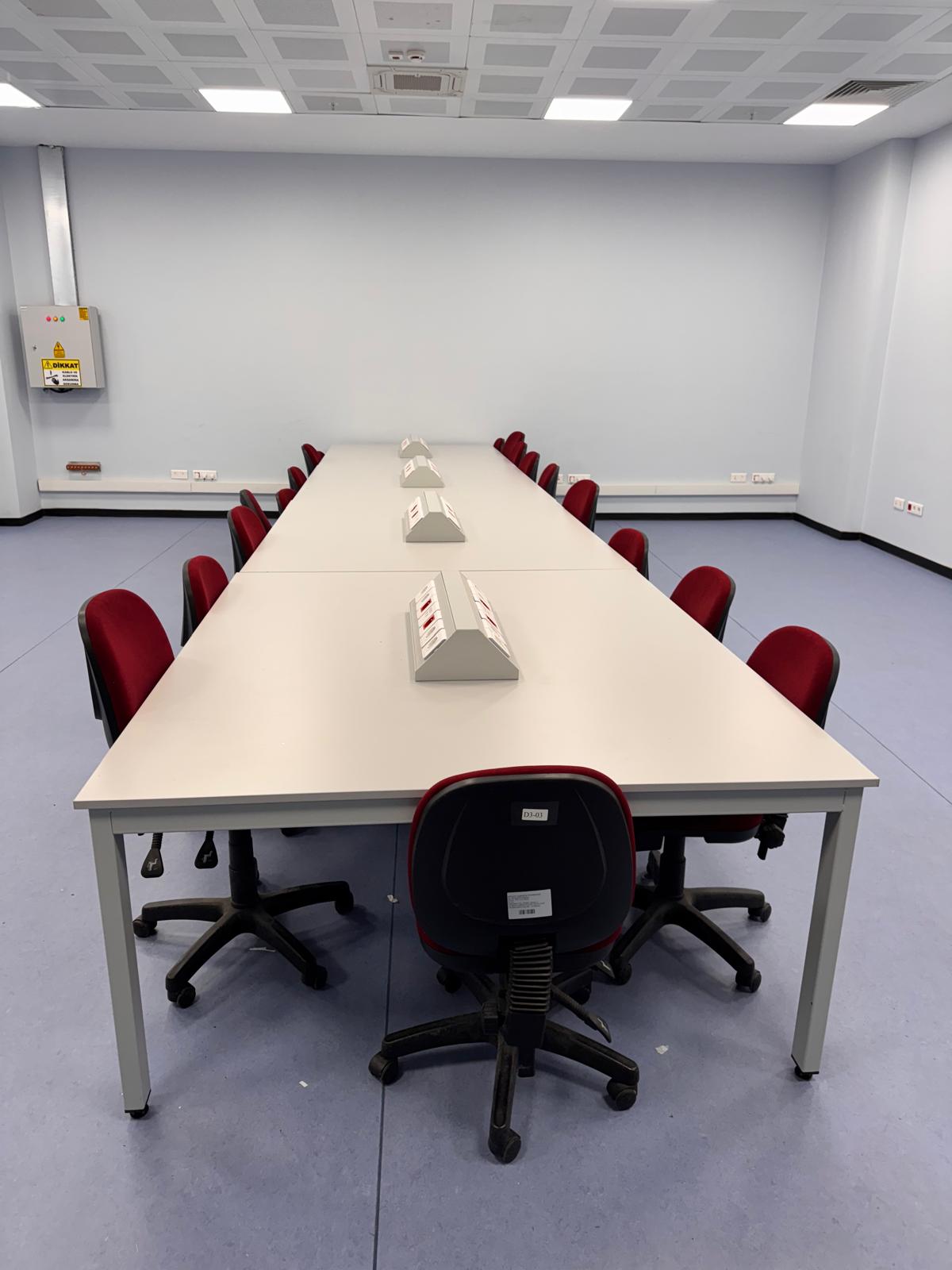 General view of Karabük University Faculty of Computer and Information Sciences – Free Study Laboratory.
Purpose of the Laboratory
The Free Study Laboratory is designed to provide a flexible and multipurpose work environment that allows students to develop projects individually or in groups with their own computers. This laboratory is used as a support area especially for graduation projects, artificial intelligence and software development applications, IEEE student community activities, embedded system design and research projects. The aim is to strengthen students' independent learning, problem-solving and innovative project development skills by applying their theoretical knowledge on their own hardware.
Laboratory Usage Rules
-
The laboratory can be used by registered students with their own laptops.
-
Electrical outlets and network ports should only be used with appropriate cables and approved devices.
-
The order of common areas must be maintained; desks and chairs should be returned to their original positions after work.
-
Students working in groups must write the date, time and project topic in the laboratory logbook.
-
Any technical failure or security problem must be reported to the laboratory supervisor immediately.
-
The laboratory should not be used as a personal storage area.
Areas of Use
-
Graduation projects and research-oriented applications
-
Software development, data analysis and artificial intelligence modeling studies
-
Embedded system programming and circuit simulation
-
IEEE student community and TEKNOFEST project preparations
-
Individual study outside of class or group project meetings
-
Presentation, documentation and reporting work
Learning Outcomes
-
Gains project development experience by effectively using their own hardware and software resources.
-
Can produce and test solutions for real engineering problems.
-
Develops teamwork coordination, time management and project planning skills.
-
Exhibits behavior in accordance with laboratory safety and work ethics.
-
Expresses work results in the form of reports, presentations or software output.
-
Develops lifelong learning awareness and gains the ability to conduct independent research.